Sanbornton, New Hampshire
Sanbornton, New Hampshire
Sanbornton, New Hampshire
[video: Experineced logger fells a tree]
Sanbornton, New Hampshire
Sanbornton, New Hampshire
[video: Red eft on the move]
Sanbornton, New Hampshire
Hillsborough, New Hampshire
Toward Monograph
Hillsborough, New Hampshire
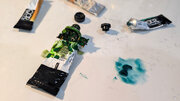
Hillsborough, New Hampshire
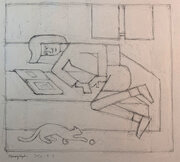
Hillsborough, New Hampshire
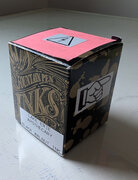
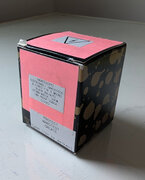
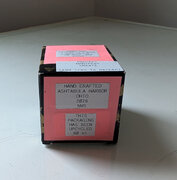
Hillsborough, New Hampshire
Toward Playtime
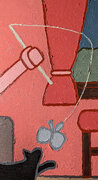
Hillsborough, New Hampshire
Toward Woman and Snake
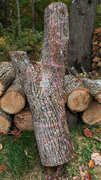
Hillsborough, New Hampshire
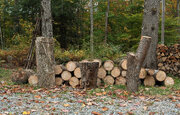
Hillsborough, New Hampshire
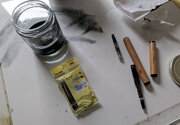
Hillsborough, New Hampshire
“Have I sawed it pretty straight?” John asked.
“We don’t praise apprentices much,” said Ebenezer, “especially when they are beginning, for fear it should make them conceited. People that know very little are always apt to be very vain of what little they do know.”
The Boy's Own Workshop: Or, The Young Carpenters by Jacob Abbott, 1866
Cleveland, Ohio
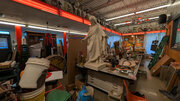
Cleveland, Ohio
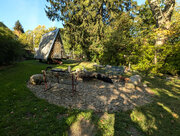
Cleveland, Ohio
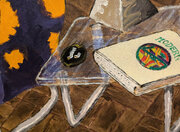
Cleveland, Ohio
Cleveland, Ohio
Cleveland, Ohio
Cleveland, Ohio
Cleveland, Ohio
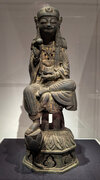
Cleveland, Ohio
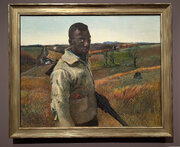
Cleveland, Ohio
Cleveland, Ohio
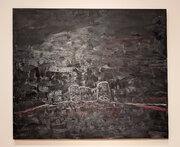
Cleveland, Ohio
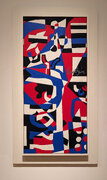
Cleveland, Ohio
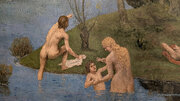
Cleveland, Ohio
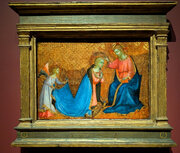
Cleveland, Ohio
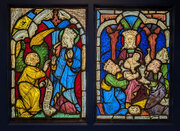
Cleveland, Ohio
Cleveland, Ohio
Hillsborough, New Hampshire

Hillsborough, New Hampshire
[video: Light on a tree]
Hillsborough, New Hampshire
Hillsborough, New Hampshire
Hillsborough, New Hampshire
The creator does not see, he feels. What he feels is a certitude, the assurance of not being unequal to a task and of being bound to a particular path marked out by his previous works. But he also feels a desire which answers to a call: something wants to come into being, something on which he has reflected for a long time as a craftsman. These terms are untranslatable for the layman, both because of their reference to something personal and because of their technical character. It is with himself that the artist debates as he thinks out his colors, harmonies, or characters. What this act of meditation, which is like the labor of childbirth, strives to fix and deliver is something which wants to be. The work which the artist bears within him is, on this plane, already a demand. But it is only a demand, one entirely inside the creator. It is nothing he can see or imitate. In preparing himself for the execution-performance, the artist puts himself into a state of grace, and the demand which induces it is the expression of an inner logic—the logic of a certain technical development, of a peculiarly aesthetic searching, and of a spiritual maturation. All this comes together in the artist, who is precisely that individual in whom it all merges. More deeply than other men, he creates himself by creating and he creates because he creates himself.
—Mikel Dufrenne, The Phenomenology of Aesthetic Experience, 1953, p. 31
Hillsborough, New Hampshire
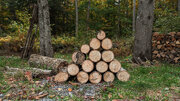
Henniker, New Hampshire
Toward Garage Sale
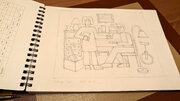
Hillsborough, New Hampshire
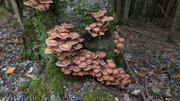
Hillsborough, New Hampshire
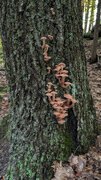
Hillsborough, New Hampshire
We can no longer think of the artist as a sort of demiurge bringing raw matter to life, for the simple reason that raw matter no longer exists. We now know that matter is intelligent, down to the tiniest Higgs boson.
—Giorgio Griffa, Paths Through the Forest (2025)
Hillsborough, New Hampshire
Toward Playtime
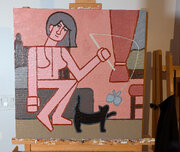
Hillsborough, New Hampshire
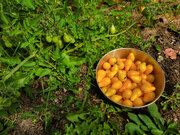
Hillsborough, New Hampshire
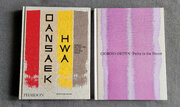
Hillsborough, New Hampshire

Hillsborough, New Hampshire
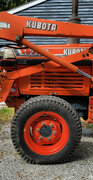
Hillsborough, New Hampshire
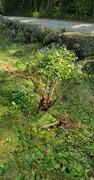
Hillsborough, New Hampshire
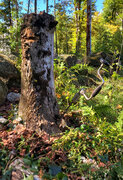
Hillsborough, New Hampshire
People have been saying for some time that we may be beginning to take leave of literature and to anticipate an illiterate culture.
What will that culture look like? Spoken language will invade the scene day and night from speakers, TV screens, and computer terminals. In this it probably won’t be very different from what it was before the invention of letters. This won’t matter, however, for language, although omnipresent, will no longer be at the center of culture, but will form a sort of noisy background. New dimensions of thought will develop, profoundly changing not only ideas but action. Poetic thought and mathematics will merge in a way that we are as yet unable fully to appreciate, although we can already observe the first results of the merger in synthetic imagery and music. Our children’s lives will be as different from ours as ours is different from pre-historical life. And our children’s children probably won’t feel the absence of literature as a great loss. It’s different for us, who fear that the letter, this most precious heritage entrusted to us by our ancestors, will lose its splendor. Those still committed to the writing of letters, despite their belief in the futility of that commitment, may feel that with the loss of this remarkable cultural object life will lose much of its attraction. For them, scribere necesse est, vivere non est [writing is necessary, living is not]. Our children’s children may think that with the defeat of the cumbersome code of the letter, new horizons of thought were opened. Many of us will feel that in taking leave of literature, we are taking leave of many of the most noble values with which we identify ourselves.
—Vilém Flusser, “What Comes After Z,” Artforum, 1987
Hillsborough, New Hampshire
The Jewish tradition is not optimistic about human nature but it is stubbornly, insistently possibilistic.
—Shai Held, Judaism Is About Love, 2024, read on Rosh Hashana
Hillsborough, New Hampshire
The bottom of my soul has such depth;
Neither joy nor the waves of sorrow can reach it
—Nishida Kitarō, 1958
Hillsborough, New Hampshire
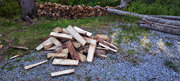
Hillsborough, New Hampshire
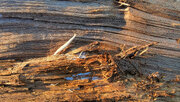
Hillsborough, New Hampshire
Toward Playtime
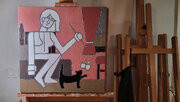
Hillsborough, New Hampshire
Toward Playtime
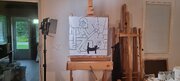
Hillsborough, New Hampshire
…the concept of “gesture” may be defined as a movement that expresses a freedom. The gesture, as the movement it is, is in fact determined, as are all other movements, and in this sense completely explainable. But what makes it unique is that, untouched by any of this, it expresses a subjectivity [Innerlichkeit, “inwardness”] that we are forced to call “freedom.” Accordingly, the competence of a general theory of gestures would be the study and ordering of acts of expressions of freedom. …gesture is a movement through which a freedom is expressed, a freedom to hide from or reveal to others the one who gesticulates. Through this redefinition, the receiver of the gesture is drawn into the competence of a general theory of gestures, and the theory becomes a meta-theory of the theory of communication.
—Vilém Flusser, Gestures
Hillsborough, New Hampshire
As an “interface” theory, [a general theory of gestures] would break through the structures of the sciences as they have been elaborated and are currently institutionalized in universities and elsewhere. In this sense, it would have an antiacademic character. But it would also have an anti-ideological character, because although it would be interested in people and events, it would proceed with a minimum of assumptions. These aspects of the theory, namely, its interdisciplinary, antiacademic, and anti-ideological qualities, will presumably characterize a whole range of future theories.
—Vilém Flusser, Gestures
Hillsborough, New Hampshire
For the ancients, “theory” was a contemplative examination of eternal forms. For the bourgeois, it was a group of coherent hypotheses. In the present, theory is becoming a strategy for being-alive-in-the-world. The contemporary researcher, the contemporary theoretician, measures the nearness of the environment, but neither to observe its form nor to hypothetically explain it. It is rather to transform the approaching possibilities into freedom.
—Vilém Flusser, Gestures
Hillsborough, New Hampshire
Of course we have no doubt that the tangible world can be manipulated further through technology. But we believe that this world has its limits. There is no doubt that more and more ingenious technical frivolities can be contrived. The human body can be objectified and then controlled. The economy can be manipulated. The human mind can be programmed and so manipulated. Perhaps human beings can be fabricated. But there are two concerns. The first is whether this progressive objectification is not accelerating the loss of concrete reality. The second is whether this progressive objectification is interesting.
—Vilém Flusser, Gestures
Hillsborough, New Hampshire
The researcher who approaches society as if it were an ant colony, the technocrat who manipulates the economy as if it were a chess game, is a criminal. He maintains that, through objective perception, he rises above ideologies. He is in fact a victim of the ideology of objectivity.
—Vilém Flusser, Gestures
Hillsborough, New Hampshire
At present, the gesture of searching is providing increasingly compelling evidence that subject and object are always interwoven. A subject is always the subject of some sort of object, and an object is always the object of some sort of subject; there is neither subject without object nor object without subject. This is not the perception of a subject encountering an object. It is an actual relationship from which subjective and objective poles can be abstracted. Subject and object are abstract extrapolations of a concrete relation. The “transcendental mind” and “objectively given world” are ideological concepts extrapolated from actual reality—reality we are and in which we are.
—Vilém Flusser, Gestures
Hillsborough, New Hampshire
So there are two possible diagnoses: either the telephone network will serve as a model of a network that keeps branching out, for example, for reversible video networks and computer terminals, and in this case, we are moving toward a telematic society of self-recognition and the acknowledgment of others; or the second alternative is a centrally controlled and programmed mass society. Although current signs point toward the second alternative, it is too repugnant to face squarely. In such an apparently harmless tool as the telephone, both possibilities are visible. Which one will become reality depends in part on us.
—Vilém Flusser, Gestures
Hillsborough, New Hampshire
One of the possible definitions of freedom (and not necessarily the worst) describes it as having the same parameters as dialogue. In keeping with such a definition, freedom in a given country could be measured by the coverage and efficiency of the telephone network, and the relatively paleotechnical character of the telephone in all countries would permit us to conclude that no country is overly concerned about the freedom of its citizens.
—Vilém Flusser, Gestures
Hillsborough, New Hampshire
It will be apparent to anyone who has ever made such a gesture that we recognize ourselves in them, and only in them: only in piano playing, only in painting, only in dancing does the player, the painter, the dancer recognize who he is. It is a founding principle of Zen Buddhism that self-recognition can be a religious experience, if the recognition is of the “whole” self: its rituals (tea drinking, flower arranging, board games) are therefore sacred rites. Certainly the greatest discovery of Jewish prophesy is that religious experience is an experience of the absurd, the groundless, that “God” is manifest as that which is inexplicable, indefensible, “good for nothing else”: hence its battle against magic and its insistence on the absurd rite, with no aims that make any sense. But all these noble insights, those of the artist, the Zen monk, and the prophets, can be gained in a modest and profane way by watching such everyday gestures as pipe smoking with sufficient patience. For then it becomes clear how each of us is a virtual artist, and a virtual Zen monk, and a virtual prophet. For each of us performs purely aesthetic, absurd gestures of the same type as smoking a pipe. What also becomes clear, of course, is what sets most of us apart from real artists, Zen monks, and prophets, namely, the complete renunciation of reason (in the sense of explicability and purpose) and the unconditional surrender in the gesture and to the gesture essential to the real artist, the real Zen monk, the real prophet.
—Vilém Flusser, Gestures
Hillsborough, New Hampshire
“That is what brings pleasure: to bear witness to oneself, freely and without purpose, within explicitly chosen parameters; to recognize oneself by one’s style, and then to immerse all other gestures (e.g., that of writing and that of conversing with a friend) in this style. From this standpoint, perhaps, we can appreciate the familiar saying about style making the man. In other words, pipe smoking is a gesture that permits us to act out, that is, to find ourselves in the world through our own style. This kind of pleasure can only be defined as ‘aesthetic,’ and so we can now say what was meant by the word art when we were discussing ritual gesture as a phenomenon of the artistic life. The word art means the gesture through which existence “acts itself out,” freely and purposelessly bearing witness to itself, within appropriate parameters. The “artistic life,” then, is the life-form that depends on the style in which gestures are performed. So the ‘artistic life’ is not about changing the world, or about being in the world with others, but about finding itself in the world.”—Vilém Flusser, Gestures
Hillsborough, New Hampshire
“Even with this, however, we still have not come to the essential thing about smoking a pipe and about ritual life in general. It only comes into view when we reflect that we are dealing with an essentially aesthetic phenomenon. The assertion that pipe smoking and ritual gestures in general are aesthetic phenomena is risky primarily because it puts the question of art in an unfamiliar light. It’s not that we’re unfamiliar with emphasizing the ritual aspects of so-called artistic creation. In a certain sense, the romantic conception of art and any l’art pour l’art treats artistic activity as a kind of rite. What is unfamiliar about the assertion is not the claim that art is a kind of rite but just the opposite, the implication that ritual is a kind of art. This does not imply that there is a ritual form of being that expresses itself in specific gestures and in an artistically active life, among other things, as was the case in the romantic era or in l’art pour l’art. It rather implies that there is an aesthetic form of being, the artistic life, and that this life expresses itself in various gestures, including ritual ones. It is not art that is a kind of rite but a rite that is an art form. It is not that there is, for example, a Jewish art that expresses itself in literature or music but also in ritual, and a Jewish philosophy and ethics in addition, but just the opposite, the whole of Judaism, understood as a ritual form of life, is an art form among other ritual forms of life, and Jewish philosophy and ethics are aspects of this art form that threaten to obscure the essential thing, namely, the aesthetic dimension of Judaism. The assertion is unfamiliar and risky because art is usually understood to be a category of being within which such phenomena as rites, music, painting, and poetry come about. This is not the usual claim that the artistic life is a life-form along with the political life, the scientific life, or the religious life, or even that the artistic life is aligned under the religious one (Kierkegaard). It is rather the unfamiliar claim that religious life, inasmuch as one understands it to be a ritual life, is one kind of artistic life-form. This unfamiliar claim does not mean a sanctifying of the artistic life, but conversely, the desanctifying of ritual, for it was reached through the observation of profane pipe smoking.”—Vilém Flusser, Gestures
Hillsborough, New Hampshire
“As actually existing substances, paintings are individuals—that is to say, beings that cannot be divided into parts without ceasing to be the particular beings they are. When a painter is not pleased with the over-all effect of one of his works, he may cut out of it one or two of the parts he prefers and throw away the rest. If he does so, each part becomes a new individual. As for the primitive painting—that is, the primitive individual—it ceases at once to exist. To say that paintings are individuals is therefore to say that, considered as the very being it is, each of them enjoys the privilege of indivisibility.”—Étienne Gilson, Painting and Reality, 1955
Hillsborough, New Hampshire
Jupiter Island, Ontario
Jupiter Island, Ontario
Hillsborough, New Hampshire
Nothing is born, nothing dies.
Nothing to hold on to, nothing to release.
Samsara is nirvana.
There is nothing to attain.
—Vasubandhu, from the Thirty Verses (5th century)
Hillsborough, New Hampshire
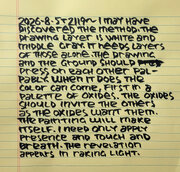
2026-8-5T2119~I may have discovered the method. The drawing layer is white and middle gray. It needs layers of those alone. The drawing and the ground should press on each other palpably. When it does the color can come, first in a palette of oxides. The oxides should invite the others as the oxides want them. The painting will make itself. I need only apply presence and touch and breath. The revelation appears in raking light.
Hillsborough, New Hampshire
Toward Playtime
Portland, Maine
Rockland, Maine
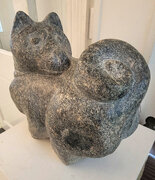
Rockland, Maine
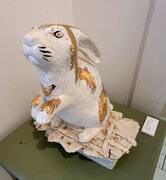
Hillsborough, New Hampshire
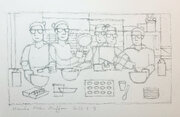
Hillsborough, New Hampshire
“Listening to music is the gesture that defeats the skin by transforming it from a boundary into a connection. It is the gesture of ecstasy.”—Vilém Flusser, Gestures
Hillsborough, New Hampshire
“There are two levels of history: the four-dimensional one of daily life and the three-dimensional one of the Cartesian basilicas. Complex feedback links the two levels, but the tendency is to prefer the three-dimensional level, trompe-l’oeil as it is, over the four-dimensional, which resists, presents obstacles. We cannot dismiss the possibility that in the future, existentially significant history will play out before an audience on walls and television screens rather than in time and space. That would be authentic posthistory. That is why film is the “art” of our time and the filmic gesture is that of “new people” with whose being we are not entirely in sympathy.”—Vilém Flusser, Gestures
Hillsborough, New Hampshire
“It is banal to regard the cinema as the archetypal womb, that windowless cave that means both birth and death, even though the similarities between cinema and Plato’s cave, with the moving shadows on the wall, are so striking that it’s impossible to read Plato’s myth without thinking of films. Banal as the archetypal connection may be, then, the thought that Plato was the first film critic is a provocative one.”—Vilém Flusser, Gestures
Hillsborough, New Hampshire
“[T]o observe a situation is to manipulate it, or to put it another way, observation changes the observed phenomenon. To observe a situation is, to the same extent, to be changed by it. Observation changes the observer. … The objectivity of an image (an idea) can only ever be the result of manipulation (observation) of one situation or another. Each idea is false to the extent that it manipulates what it takes into consideration, and in this sense, it is ‘art,’ which is to say fiction. Nevertheless, there are ideas that are true in another sense, namely, in really grasping what is under consideration. That may be what Nietzsche meant when he said that art is better than truth.”—Vilém Flusser, Gestures
Hillsborough, New Hampshire
“A fish simply belongs in water and I belong to a life of solitude.”—Paula Modersohn-Becker, 1901
Hillsborough, New Hampshire
This view of ourselves in a situation (this “reflexive” or “critical” vision) is characteristic of our being-in-the-world: we are in the world, and we see it, we “know” about it. But to say it once more: there is nothing “objective” about this. The gesture with which we release ourselves from a particular role and which is just as available to the man with the apparatus remains bound to a “place” from which we can assert that we are experiencing the same situation twice. This “place” is the basis for a consensus, for intersubjective recognition. If we encounter the man with the apparatus on this basis, we don’t see the situation “better”; rather, we see it intersubjectively, and we see ourselves intersubjectively.
—Vilém Flusser, Gestures
Coconut Grove, Florida
Jala Studio, Providence, Rhode Island
Jala Studio, Providence, Rhode Island
Hillsborough, New Hampshire
Wilmington, Vermont
Wilmington, Vermont
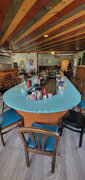
Williamstown, Massachusetts
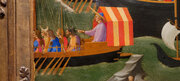
Williamstown, Massachusetts
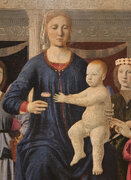
Williamstown, Massachusetts
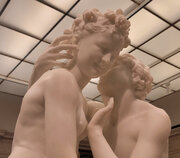
Williamstown, Massachusetts
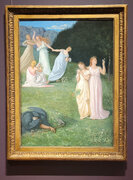
Williamstown, Massachusetts
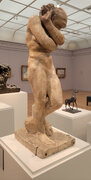
Williamstown, Massachusetts
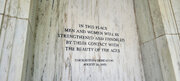
Williamstown, Massachusetts
[video: Feather]
Williamstown, Massachusetts
[video: “Giorgio Griffa: Paths in the Forest” at the Clark Art Institute]
Mount Greylock, Massachusetts
Toward Summer Dinner, Bascom Lodge
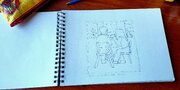
Bascom Lodge, Mount Greylock, Massachusetts
Toward Monika Makes Muffins
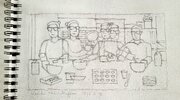
Hillsborough, New Hampshire
“The subject is the cause of the photograph and the meaning of painting.”—Vilém Flusser, Gestures
Hillsborough, New Hampshire
“The meaning of the gesture of painting is the painting to be painted. This was not discussed very much in this essay because the intention was to pursue the gesture itself. Of course, the painting to be painted is assumed in the gesture, the painted painting is the stiffened, frozen gesture. If there were a general theory of gestures, a semiological discipline responsible for deciphering gestures, art criticism would not be empirical or ‘intuitive’ and would not try to explain aesthetic phenomena away by assigning causes as it does today. Rather, it would be an exact analysis of gestures that have solidified into paintings. In the absence of any such ‘choreographology,’ the better strategy may be to observe the gesture as it occurs before us and in us: as an instance of freedom. It means to try to look at the world with fresh eyes, without the prejudicial spectacles of objectification and abstraction that come with our tradition. Then the world would ‘appear’ again, illuminated with the splendor of concrete phenomena.”—Vilém Flusser, Gestures
Hillsborough, New Hampshire
“The gesture of painting is a form of freedom. The painter does not have freedom, he is in it, for he is in the gesture of painting. Being free is synonymous with actually being there. The observation of painting allows us to see the concrete phenomenon of freedom. Only through subsequent efforts to explain it can its ontological, aesthetic, and political dimensions be distinguished. Freedom is actually indivisible: it is the way we recognize that others are in the world with us.”—Vilém Flusser, Gestures
Hillsborough, New Hampshire
[video: Weeding]
To establish a garden in is heroic. Over years, root systems grow into woven carpets. I have learned how to pull them up using an edger and a hand cultivator. To take a garden back from neglect is to reject tragedy. A bed can return to grasses with surprising speed. To maintain a garden is gentle work, nothing like yanking up the carpet of grasses and tree roots. But the garden requires it constantly.
There are whole realms of the self left to grass. I can feel them when I meditate, asking for their own good for me to tear them up, to water the exposed dirt, to add compost. If I pull mind-weeds all day it is easier to face them, because areas of the garden are ordered and sane. One compares them and knows what is possible. We must neither try to rule nature nor let it rule us.
Hillsborough, New Hampshire
“The gesture not only reaches from the present into the future but also brings an anticipated future back into the present and returns it to the future: the gesture is constantly monitoring and reformulating its own meaning.”—Vilém Flusser, Gestures
Hillsborough, New Hampshire
This evening, I snipped some thyme in the garden and heard flapping. I approached. A pileated woodpecker, twenty paces away, at eye level but not wanting to be seen, all eighteen inches of him, flew off. Soon I heard knocking on a distant tree.
Hillsborough, New Hampshire
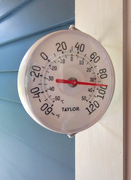
Hillsborough, New Hampshire
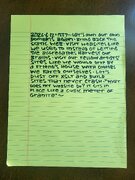
2026.6.12🕒1337~Let’s own our own domains again. Bring back the static web. Visit websites like we used to instead of letting the aggregators harvest our brains. Visit our fellow artists’ sites like we would drop by a friend’s house with cookies we baked ourselves. Let’s dust off XSLT and build sites that never crash. “what does my website do? It sits in place like a cubic meter of granite.”~
Hillsborough, New Hampshire
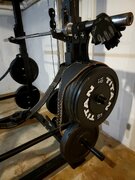
Hillsborough, New Hampshire
“It is apparent that the disruptive gesture resembles work. Work is a gesture whose motive lies in the decision to make something different from what it is, because it is not as it should be. Both destruction and work decide that something is not as it should be. Unlike work, destruction decides not to make it differently but to get rid of it altogether. It negates not just the way the object is but the object itself. One could then suppose that destruction is more radical than work. That would be an error. It is less radical, for its decision does not get at the roots of the not-supposed-to-be. It has no model of obligation. Work is revolutionary. It replaces that which should not be with something that should be. Destruction is not revolutionary: it says no, but not dialectically. The being expressed in the destructive gesture is less radical in the world than one articulated in gestures of work.”—Vilém Flusser, Gestures